Riverfront Land in Goa: Why the Mandovi and Mopa Corridors Are the Last Great Investments
There is a particular quality to standing at the edge of a river in Goa — the Mandovi at dusk, or the Mopa tributary in the monsoon — that no amount of property brochure language adequately captures. HNI buyers who have been through the routine of hill-view ap
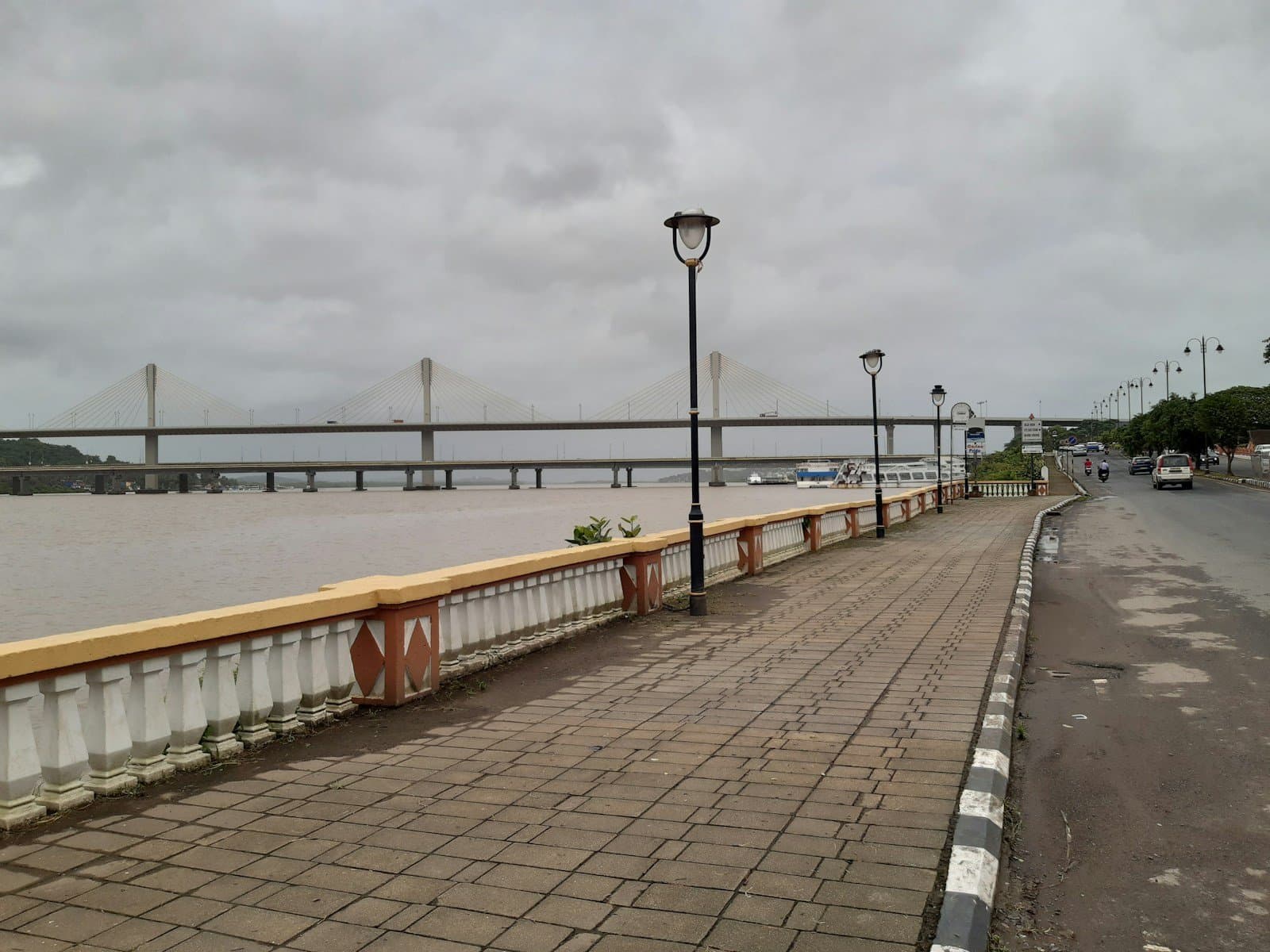
There is a particular quality to standing at the edge of a river in Goa — the Mandovi at dusk, or the Mopa tributary in the monsoon — that no amount of property brochure language adequately captures. HNI buyers who have been through the routine of hill-view apartments and gated villa projects know this. The river is different. It is why, year after year, riverfront land in Goa commands a premium that defies the otherwise erratic pricing logic of the broader market.
But the riverfront story in 2026 is not just about lifestyle. It is about a supply constraint so structural that serious investors are treating these corridors as a once-in-a-generation allocation.
What “River Touch” Actually Means in Goa
The term is used loosely in marketing, but it has a precise legal and practical meaning that buyers need to understand before they evaluate any riverfront opportunity in Goa.
In the Goa Regional Plan, land abutting major rivers — the Mandovi, Zuari, Chapora, Sal — carries specific zoning designations. The most sought-after is settlement zone with river touch or orchard zone classification, which permits residential and certain agricultural development while preserving the riverfront character. These are not interchangeable with CRZ (Coastal Regulation Zone) designations, though proximity to water often triggers additional CRZ buffer requirements.
What this means practically: river-touch plots in settlement or orchard zones are buildable, but with restrictions on footprint, height, and setbacks that preserve the river interface. This is precisely what makes them valuable — the restrictions that limit development are the same restrictions that protect the asset’s premium character over time. No one builds a hotel on your river view. The scarcity is built into the regulatory structure.
Why Supply Is Genuinely Finished
Goa’s two major river systems — the Mandovi and the Zuari — have been continuously developed since the 1990s. The Mandovi corridor from Old Goa to Divar, the stretch through Ribandar and Chorao, the North Goa bank from Panaji toward Aldona — these have absorbed decades of demand from both domestic HNI buyers and NRI investors. What remains is not abundant.
Regulatory tightening has compounded this. CRZ notifications have progressively expanded buffer zones and restricted new construction within 100–200 metres of tidal influence. The practical effect is that large-format, river-touch plots that are simultaneously within a buildable zone and clear of CRZ restrictions are vanishingly rare. When they come to market, they do not come back.
The Mopa corridor is a partial exception — it represents emerging supply rather than legacy inventory — but even here, the combination of river touch and permitted-zone classification applies to a finite land bank. Once absorbed, there is no second tranche.
Two Corridors, Two Investment Profiles
The serious investor in Goa riverfront needs to understand that the Mandovi and the Mopa are not the same thesis, even though both carry the river-touch premium.
Mandovi — The Established Corridor
The Mandovi is Goa’s prestige river. It flows through the capital, past heritage properties, past the oldest estates, through a landscape that has been part of the Goa story for centuries. River-touch land on the Mandovi — particularly large-format plots — represents the highest-conviction store-of-value play in North Goa real estate. The 3,300 Sqm Mandovi River Touch Plot currently available in North Goa, priced at ₹68,000 per Sq Mt, is the kind of asset that has no comparable replacement. At that scale, on the Mandovi, with river touch — the market for this is thin and the buyers who move tend to move decisively.
The Mandovi is not an emerging story. It is a legacy one. The investment case is preservation of wealth, asymmetric upside from Goa’s continued appreciation as India’s premier second-home market, and the irreplaceable lifestyle credential of Mandovi frontage.
Mopa — The Emerging Corridor
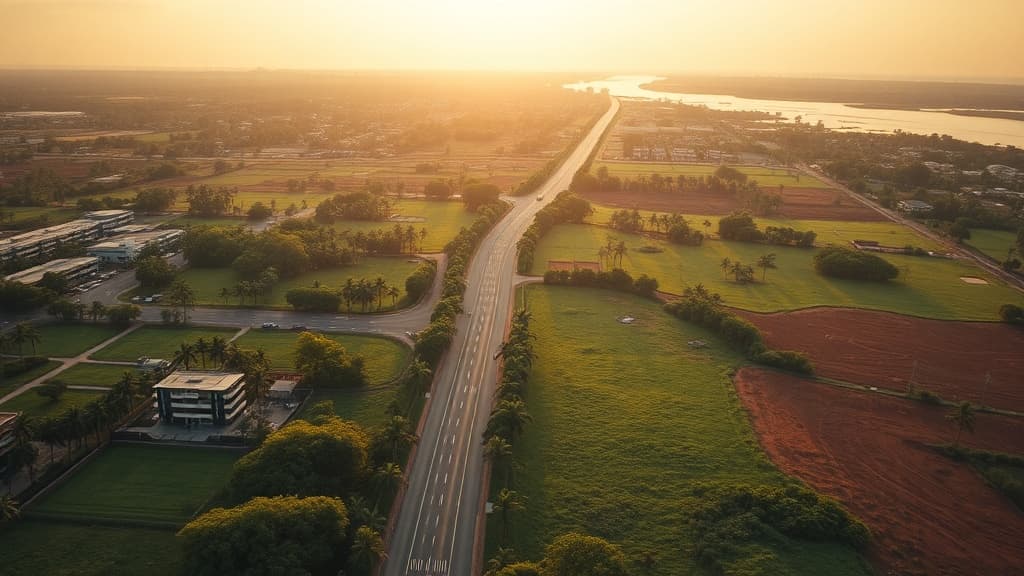
The Mopa corridor is a different proposition entirely. The Mopa International Airport has redrawn the geography of North Goa investment, and land along the Mopa river tributary — particularly large-format positions — is being quietly accumulated by investors who understand what airport proximity does to a previously underdeveloped corridor over a 7–10 year horizon.
The Mopa Land River Touch position currently available — 35,000 Sqm at ₹7,000 per Sq Mt — is a land banking play at scale. This is not a buy-and-develop-immediately opportunity. It is a thesis: Mopa Airport drives commercial and hospitality demand along the corridor; river-touch land in that corridor appreciates disproportionately as that demand fills in; a large-format position captures the full upside. The pricing reflects the emerging-corridor risk. The upside reflects the airport effect, which has a strong track record in comparable Indian markets.
What Sophisticated Investors Are Looking For
The buyers who move on riverfront land in Goa are not speculating on Goa’s general trajectory — that case was settled years ago. They are asking more precise questions:
- Is the zone classification clean — settlement, orchard, or equivalent — with documented CRZ clearance or confirmed buffer compliance?
- Is the river touch genuine, meaning the plot boundary physically abuts the river or its defined high-tide line?
- Is title clear — especially critical in Goa, where Portuguese-era land records, communidade holdings, and conversion statuses create title complexity that can take years to resolve if not verified at the outset?
- Is the plot size sufficient to accommodate a meaningful development — or a meaningful holding position — given setback and FAR restrictions?
Both the Mandovi and Mopa river-touch positions currently available through Listiing have been verified against these criteria. That verification — zone classification, CRZ status, title clarity — is not standard in the Goa market. It is the difference between a compelling listing and a credible investment.
The Closing Argument
Goa’s riverfront land has appreciated through every cycle the Indian economy has produced over the past three decades. It survived the post-2008 slowdown, the RERA adjustment period, and the pandemic. Each time, the river-touch corridor recovered faster and returned to premium pricing sooner than any other land category in the state.
The supply is not coming back. The regulatory environment is not loosening. The buyer pool — NRI, domestic HNI, and institutional — is expanding. The Mandovi and Mopa corridors represent, in the most literal sense, the last of a category. Investors who understand that are not waiting for a better entry point. There is not one coming.
View current riverfront and premium land listings at Listiing — Premium Property, Goa.
Frequently Asked Questions
Can I buy land on the riverbank in Goa?
Riverfront land in Goa is regulated under the Coastal Regulation Zone (CRZ) notification. Land within 100 metres of rivers wider than 100 metres falls under CRZ-III. Construction is restricted within the 50-metre No Development Zone (NDZ). Buildable plots sit just outside the NDZ and offer full river views with legal construction rights. Always verify CRZ clearance before purchase.
What is the price of riverfront land in Goa in 2026?
Mandovi river-touch parcels — particularly large-format, settlement-zoned, with documented river frontage — trade at a clear premium to inland plots in the same villages. Mopa corridor river-touch land sits at meaningfully lower entry levels because the corridor is still pricing-in the airport effect. Headline per-square-metre ranges quoted on aggregator portals are unreliable across this category — pricing turns on river, zone, frontage length, road access, and title cleanliness. Listiing publishes specific comparables on enquiry.
Is riverfront land in Goa a good investment in 2026?
For the right plot, yes — and the case is structural rather than cyclical. Supply is permanently finite due to CRZ restrictions and the limited length of usable, settlement-zoned river frontage. The Mopa International Airport (operational since January 2023) is the strongest current catalyst, with Pernem and Bicholim talukas attracting infrastructure-led demand. Annualised appreciation numbers quoted by aggregator portals vary wildly with their underlying samples; we underwrite specific parcels case by case rather than rely on category-wide growth figures.
What are CRZ rules for buying riverfront property in Goa?
Goa riverfront land falls under CRZ-I (ecologically sensitive), CRZ-II (built-up municipal areas), or CRZ-III (rural). In CRZ-III, no permanent construction is allowed within 50m of the High Tide Line. Between 50-200m, ground-floor construction is permitted. Always obtain the CRZ clearance certificate from the Goa Coastal Zone Management Authority and have it reviewed by a property lawyer before purchase.
Which river in Goa is best for property investment?
The Mandovi River corridor from Panaji to Bicholim offers the strongest combination of urban proximity, infrastructure access, and lifestyle premium — well-suited to luxury villa development. The Chapora River suits boutique hospitality projects. The Zuari in South Goa offers larger plots at lower entry levels, with longer investment horizons. The Mandovi corridor and the Mopa airport catchment in Pernem are the two corridors carrying the most active institutional and HNI buyer interest in 2026; relative pace of appreciation between them depends on the specific parcel and plot fundamentals.
People also ask
Quick answers on this topic.
- Where can I find riverfront land for sale in Goa? +
- Quality riverfront parcels along the Mandovi, Zuari, Chapora and Tiracol rivers occasionally come to market — but rarely on aggregator portals. They circulate through local broker relationships and curated lists like Listiing. Listiing currently has at least one Mandovi river-touch parcel listed.
- What is the price of riverfront land in Goa? +
- Per-square-metre pricing varies materially with the river, the frontage length, the zoning, the road access, and the title chain — headline ranges quoted on aggregator portals are not reliable for this category. The Mandovi commands a clear premium over inland equivalents; the Mopa corridor riverfronts trade at lower entry levels because the corridor is still pricing-in the airport effect. Listiing publishes specific comparables on enquiry.
- What are the CRZ rules for building on riverfront land in Goa? +
- Riverfront parcels fall under the Coastal Regulation Zone (CRZ) framework with specific setbacks based on the river, tidal influence, and use intensity. Permitted use is broader than ocean-CRZ in most cases; structures must respect riverbank setbacks. Always validate the plot’s CRZ classification before purchase.
- Is riverfront land in Goa a good investment? +
- For the right plot, yes. Genuine river-touch land at meaningful scale (2,000+ sq mt) is structurally undersupplied — the Mandovi has only so many kilometres of bank, and most of that is encroached or non-saleable. Scarcity drives the long-term floor.
- Why is the Mopa corridor different from Mandovi for riverfront investment? +
- Mandovi is the prestige river — close to Panjim, fully developed, and prices reflect that. Mopa corridor riverfronts are earlier in the cycle: pricing is lower, the catchment is being built around the airport, and the risk-return profile suits investors who can hold 5+ years for the corridor to mature.
Have a question?
Talk to us about what you read.
If this piece raised questions about a specific property or corridor, drop us a line. Short, honest replies — that's all we do.
More in Goa Real Estate